Almanack Of Naval Ravikant - Eric Jorgenson
Wealth compounds through specific knowledge, leverage, and long-term thinking. Follow curiosity, avoid competition, build what scales, value freedom, and invest deeply in what truly matters.

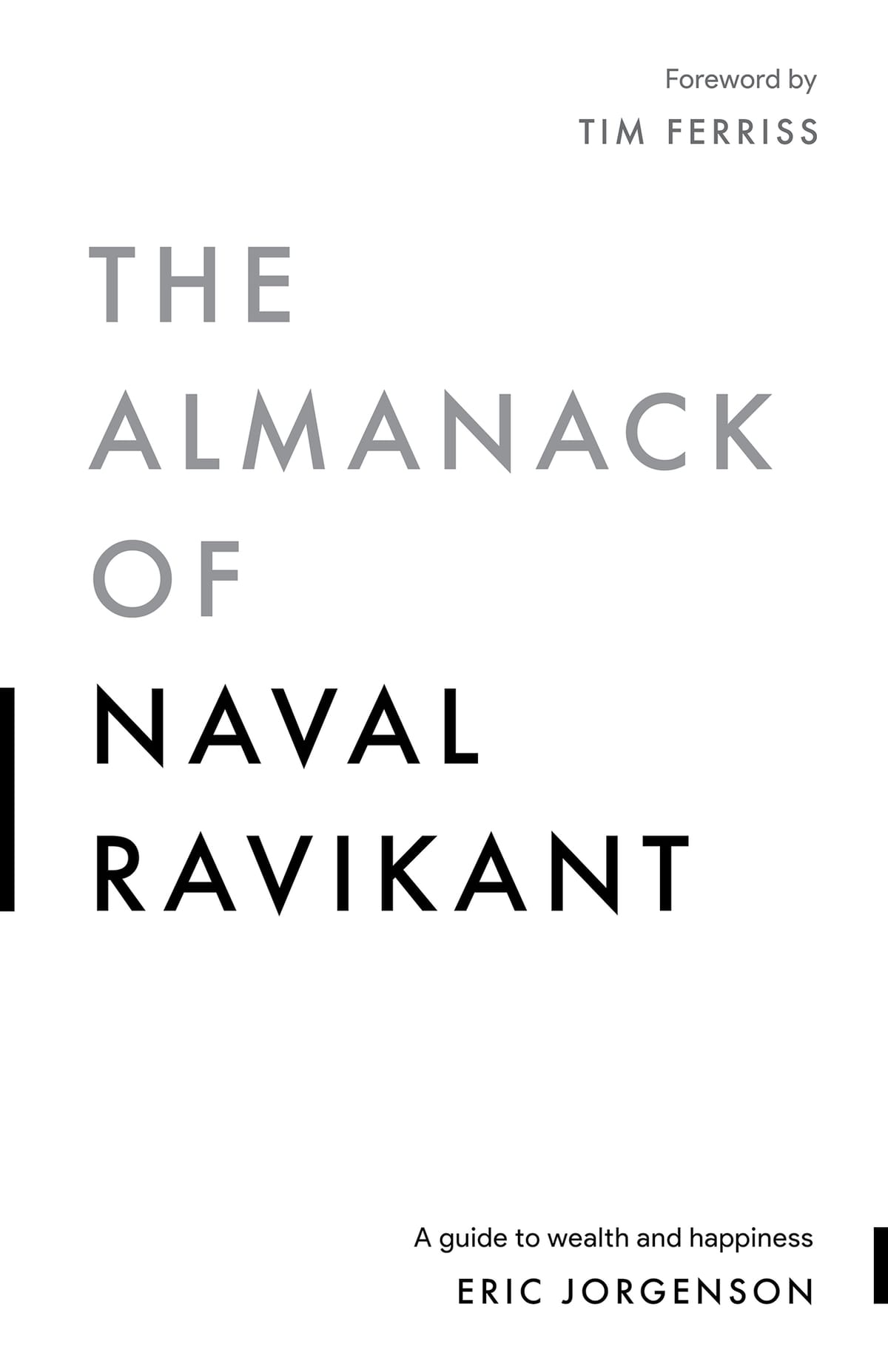
🚀 The Book in 3 Sentences
- A healthy mind starts with a healthy body — example favourite quote; the workout takes for however long it will takes.
- Wealth, relationships, knowledge, and health all grow through compound interest.
- The newly rich build permissionless leverage—code and media that work while they sleep.
🎨 Impressions
Principles that comes from Ravikant is quite unique and intriguing as he has gone through the internet industries and become wealthy from it. The way he looks into the world is as holistic as it can get encompasing long term thinking. He so much in love with reading and technologies and thats why he is involved with venture investing which makes him rapid in understanding new technologies. His traits also includes some sales skills, he really loves to absob data, obses about it and break it down which i believe is a valuable skill for me to emulate.
💡How I Discovered It
I discovered it through Elizabeth Filips’ YouTube channel in one of his youtube episode where she discusses this book. She’s a legitimate productivity voice, and thought methat knowledge isn’t hierarchical—it’s associative.
🦉 Who Should Read It?
Anyone who prefers straightforward ideas over long reading—and anyone seeking inspiration to realign their life principles or goals.
☘️ How the Book Changed Me
- I learned to value my hourly rate and use it to decide what to outsource.
- I now believe deeply in compounding—across money, relationships, reputation, knowledge, and health. (Wealth = finance, freedom, family, fitness.)
- Any new skill can be mastered within 9 months before it becomes obsolete; real gains come in the next few years—this applies to careers and promotions too.
- Persuasion matters more than technical expertise; influence will outlast many jobs.
- Credibility requires accountability, risk, failure, and even humiliation.
- True wealth comes from owning a business
- Doing things for their own sake produces the best work—whether in business, health, or relationships.
- Permissionless leverage is real: build products with zero marginal cost that scale without people or capital.
- Work like an athlete: train, sprint, then reassess.
- Get paid for unique knowledge using leverage—so output matters more than hours worked.
- Wealth is created by building businesses, opportunities, and investments aligned with a life mission.
- Set a high aspirational hourly rate and live by it. Mine: RM7,000/hour.
- The three biggest life decisions are where you live, who you’re with, and what you do.
- Freedom is my top value—freedom to act, freedom from obligation, and freedom from emotional noise.
- Be highly capable, disciplined, and gritty—especially in business.
- Physical health is non-negotiable, however long it takes.
- Choose short-term sacrifice over short-term pleasure for long-term gain.
- Act fast, but stay patient with results.
- Focus on systems and processes; goals emerge naturally.
- Read from curiosity, not self-improvement—growth follows genuine interest.
✍️ My Top Quotes
- Getting rich is about knowing what to do, who to do it with, and when to do it. Yes, hard work matters, and you can’t skimp on it. But it has to be directed in the right way.
- Learn to sell. Learn to build. If you can do both, you will be unstoppable.
- Code and media are permissionless leverage. They’re the leverage behind the newly rich. You can create software and media that works for you while you sleep.
- Work as hard as you can. Even though who you work with and what you work on are more important than how hard you work.
- If you’re not 100 percent into it, somebody else who is 100 percent into it will outperform you.
- Escape competition through authenticity.
- You do need to be deep in something because otherwise you’ll be a mile wide and an inch deep and you won’t get what you want out of life. You can only achieve mastery in one or two things. It’s usually things you’re obsessed about.
- When you find the right thing to do, when you find the right people to work with, invest deeply.
- If you don’t own a piece of a business, you don’t have a path towards financial freedom
- The real wealth is created by starting your own companies or even by investing.
- The year I generated the most wealth for myself was actually the year I worked the least hard and cared the least about the future.
- The less you want something, the less you’re thinking about it, the less you’re obsessing over it, the more you’re going to do it in a natural way. The more you’re going to do it for yourself. You’re going to do it in a way you’re good at, and you’re going to stick with it. The people around you will see the quality of your work is higher
- The final form of leverage is brand new—the most democratic form. It is: “products with no marginal cost of replication.” This includes books, media, movies, and code. Code is probably the most powerful form of permissionless leverage. All you need is a computer—you don’t need anyone’s permission.
- Knowledge workers function like athletes—train and sprint, then rest and reassess.
- Earn with your mind, not your time.
- I would rather be a failed entrepreneur than someone who never tried. Because even a failed entrepreneur has the skill set to make it on their own.
- If you’re not getting promoted through the ranks, it gets a lot harder to catch up later in life
- if you want to get rich over your life in a deterministically predictable way, stay on the bleeding edge of trends and study technology, design, and art—become really good at something.
- How hard you work matters a lot less in the modern economy.
- The more desire I have for something to work out a certain way, the less likely I am to see the truth.
- I never ask if “I like it” or “I don’t like it.” I think “this is what it is” or “this is what it isn’t.”
- praise specifically, criticize generally.
- If you have two choices to make, and they’re relatively equal choices, take the path more difficult and more painful in the short term.By definition, if the two are even and one has short-term pain, that path has long-term gain associated.
- Happiness is a choice you make and a skill you develop.
- Confucius says you have two lives, and the second one begins when you realize you only have one.
- “Okay, I’ll be late for a meeting. But what is the benefit to me? I get to relax and watch the birds for a moment. I’ll also spend less time in that boring meeting.” There’s almost always something positive.
- Because my physical health became my number one priority, then I could never say I don’t have time. In the morning, I work out, and however long it takes is how long it takes.
- “Easy choices, hard life. Hard choices, easy life.”
- Impatience with actions, patience with results.
- I don’t believe in specific goals. Scott Adams famously said, “Set up systems, not goals.” Use your judgment to figure out what kinds of environments you can thrive in, and then create an environment around you so you’re statistically likely to succeed.
- How do you define wisdom? Understanding the long-term consequences of your actions.
📒 Summary + Notes
- Set a personal hourly rate and use it to decide what to outsource. If it costs less than your rate, delegate it.
- Wealth comes from solving problems society doesn’t yet know how to solve—and scaling the solution.
- Mastery is limited to one or two things in life; obsession is required.
- When you find the right work and the right people, invest deeply.
- Only about 1% of what you do truly matters—find it, commit for life, and ignore the rest.
- Building a company means taking risk: you’re last to get paid and last to recover capital.
- Wage work can earn money, but it rarely creates financial freedom.
- Following genuine intellectual curiosity builds stronger long-term career foundations than chasing trends.
- Curiosity often leads where society is going—and pays extremely well.
- Warren Buffett uses unique knowledge as leverage: long thinking, decisive action, decades of payoff.
- Wealth creation is positive-sum; status is zero-sum and breeds conflict.
- Identify your strengths, use them to help others, give freely—long-term karma compounds.
- Avoid competition by being authentic and doing what you do best.
- Apply your skills to what society wants, add leverage, put your name on it, and take risks.
- Building a company should take months, not years: assemble, fund, launch.
- In Silicon Valley, the most successful often spot winners early—or become investors.
- Luck can be cultivated: prepare, refine your craft, notice opportunities others miss.
- Don’t network first—build something interesting and people will come to you.
- History is shaped by the young; listen to advice but don’t wait.
- Suffering reveals truth; embracing it leads to real change.
- Great ideas come from boredom, not busyness.
- Contrarians think independently; optimistic contrarians are rare and valuable.
- Slightly better decisions compound massively over time.
- Success comes more from avoiding bad judgment than having perfect judgment.
- Business requires only basic math: arithmetic, probability, statistics.
- Short-term pain often leads to long-term gain.
- It’s not mindset—it’s mental models. Read widely to build them.
- Be selective with what you read; ideas stick like songs.
- Happiness is a skill: peace without dependence on external desires.
- You can achieve anything if it’s what you want most.
- Replace “should” with “choose”—clarity reveals true intent.
- You are shaped by your habits and the people around you.
- Original contributions come from obsession.
- Health has three pillars: physical, mental, spiritual.
- The harder the workout, the easier the day.
- Choose now—later usually never comes.
- Many successful people appear as outsiders first; embrace being different.
- Freedom means freedom from reaction and obligation—not indulgence.
- Time is your most valuable asset—use it to learn and earn.
- Everything worthwhile compounds: money, health, love, relationships, habits.
- Read from curiosity, not obligation—growth follows naturally.
- Praise specifically; criticize generally.